How to Use Surface Transform on the Foneo AI Photo Editing App
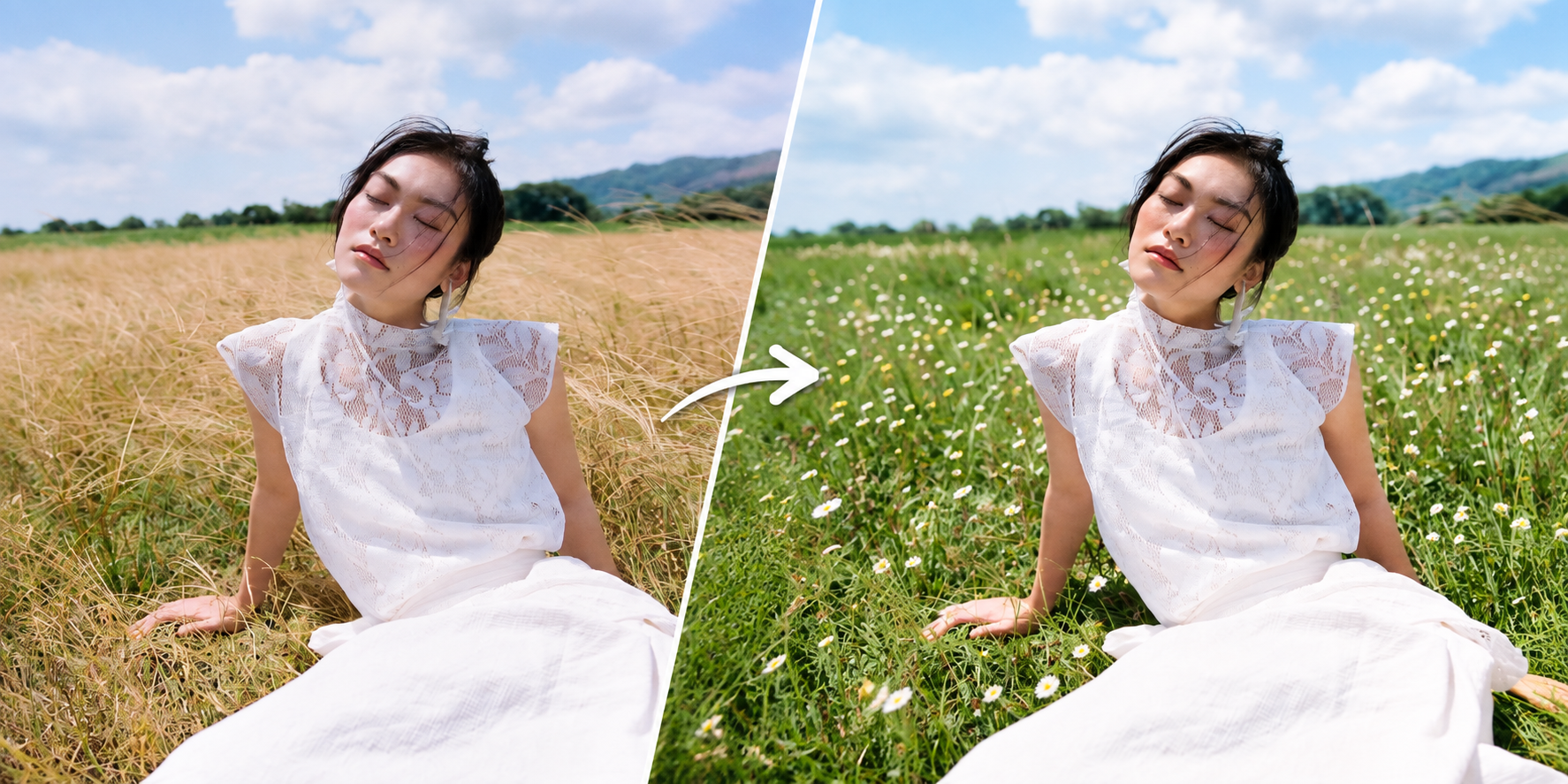
Surface Transform helps you quickly change materials and environments in photos without complicated manual editing. With the Surface Transform feature on Foneo, you can replace surfaces in your photos using AI in just a few simple steps.
Foneo provides ready-made Templates and custom Prompts, making it easy to create different surface styles for fashion photos, portraits, outdoor photos, product photos, or images where you want to change the surrounding environment.
Before & After
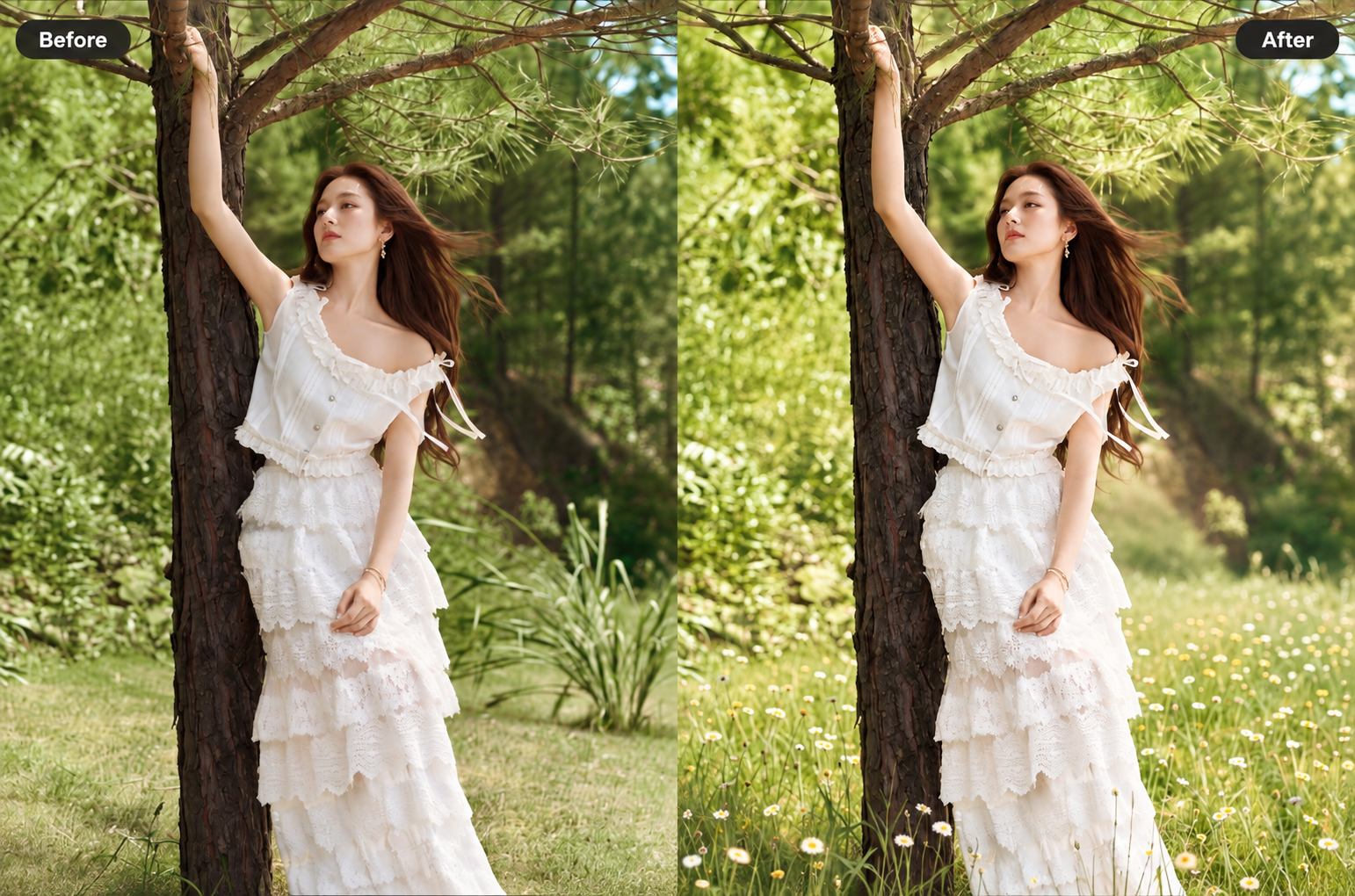
How to Use Surface Transform
To get started, upload the photo you want to edit to Foneo and open the Surface Transform feature.
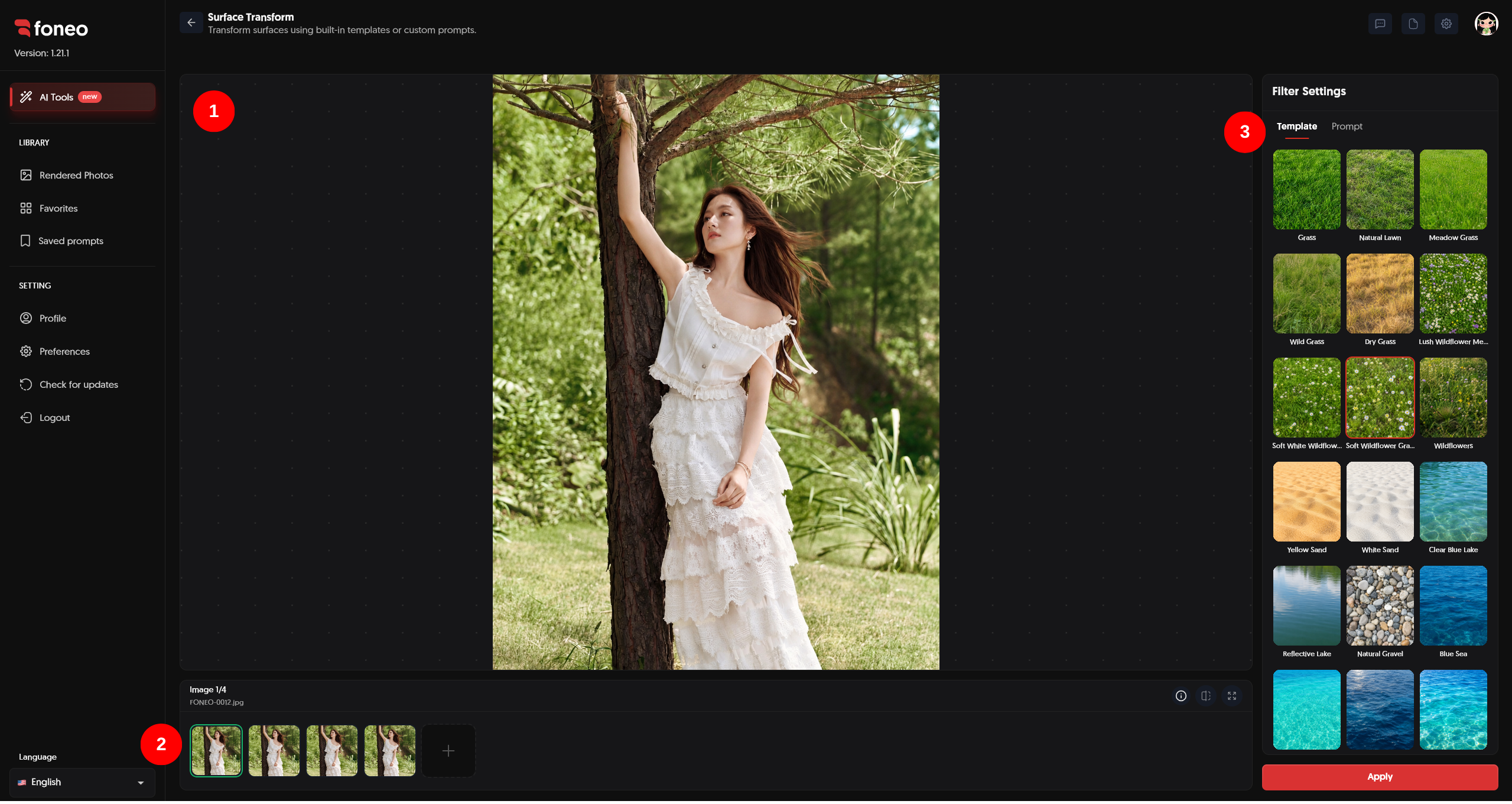
1. Preview the Photo
After uploading a photo, it will be displayed in the preview area in the center of the screen.
This is where you can check the original photo and view the result after Foneo finishes processing.
The preview area allows you to check the new surface and evaluate how well it fits the overall image.
2. Select the Photo to Edit
Uploaded photos will be displayed as thumbnails below the preview area.
- Click a thumbnail to select the photo you want to edit.
- Click + to add a new photo.
- When working with multiple photos, you can select each photo to apply the appropriate effect.
Foneo allows you to work with multiple photos within the same editing session, making it convenient when processing several images.
3. Choose a Surface Template
In Filter Settings, select the Template tab.
Foneo provides a variety of ready-made surface Templates for you to choose from.
Templates allow you to change surfaces in photos using different materials and environments. Simply choose a Template that matches your desired result, and Foneo will use AI to create the new surface.
No complicated manual editing is required. You can try different Templates to find the surface that best fits the original photo.
4. Create a Surface with a Prompt
In addition to ready-made Templates, you can describe the surface you want using a Prompt.
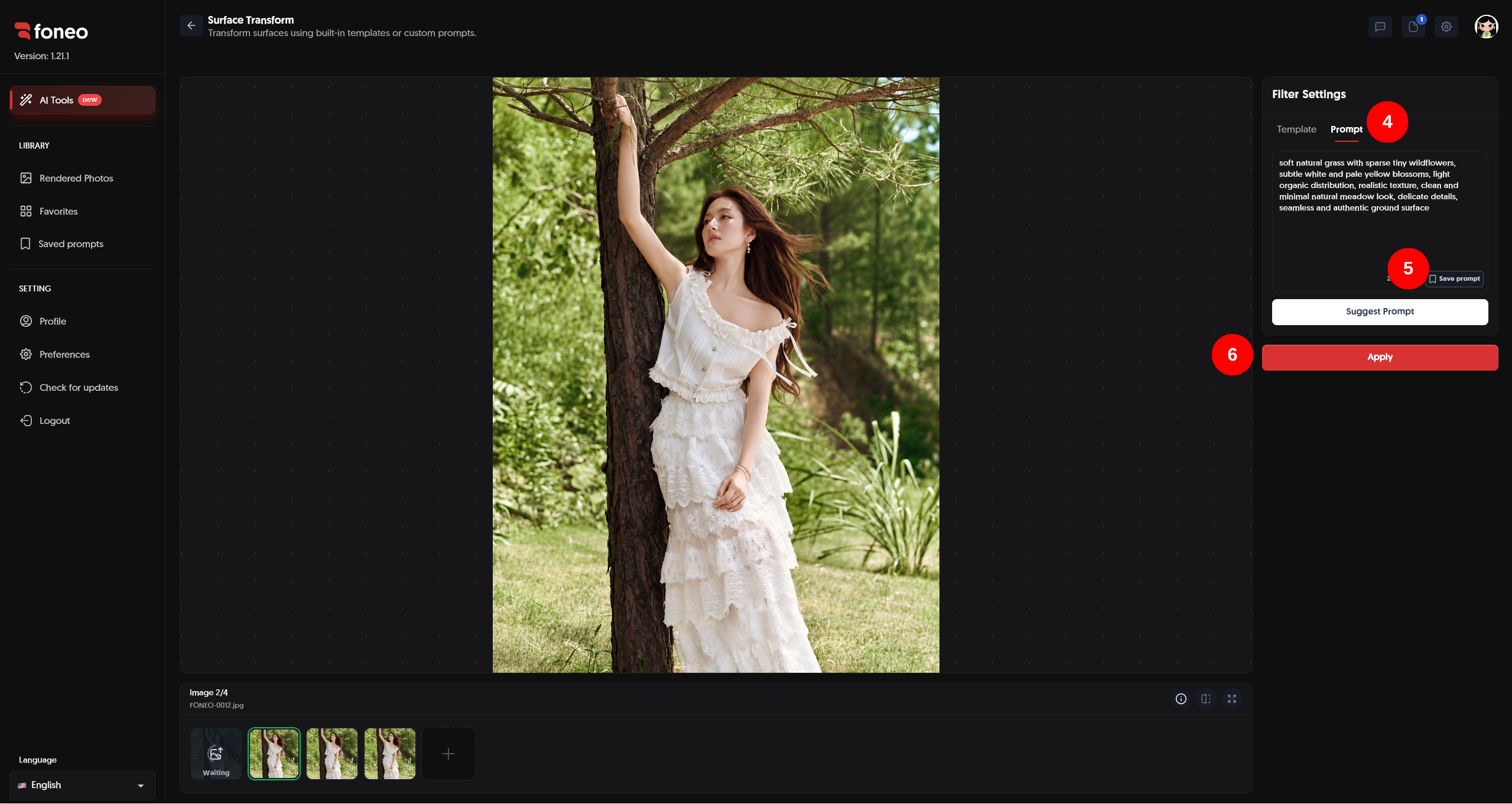
Switch to the Prompt tab, then enter a description of the surface you want to create.
You can describe elements such as:
- The desired surface type.
- Material and texture.
- Colors.
- Level of detail.
- Surface distribution.
- Natural appearance and seamless integration with the surrounding environment.
Prompt example:
Soft natural grass with sparse tiny wildflowers, subtle white and pale yellow blossoms, light organic distribution, realistic texture, clean and minimal natural meadow look, delicate details, seamless and authentic ground surface.
If you do not have an idea yet, click Suggest Prompt to get suggestions from Foneo.
5. Save a Prompt for Reuse
After creating a Prompt that works well, you can click Save prompt to save it.
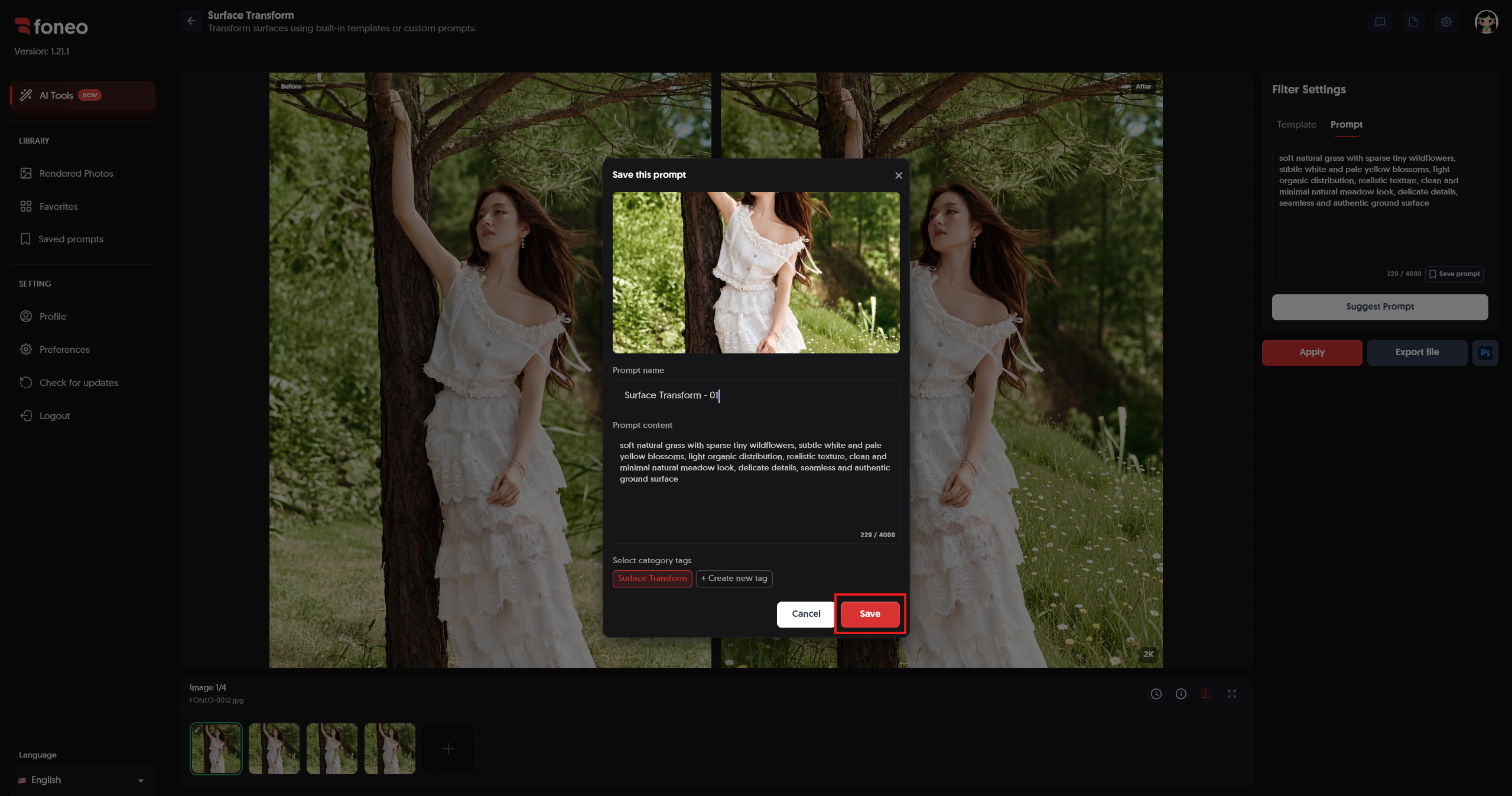
When saving a Prompt, Foneo allows you to enter a Prompt name, review or edit the Prompt content, and select a category tag for easier organization.
After clicking Save, the Prompt will be added to your saved Prompts list.
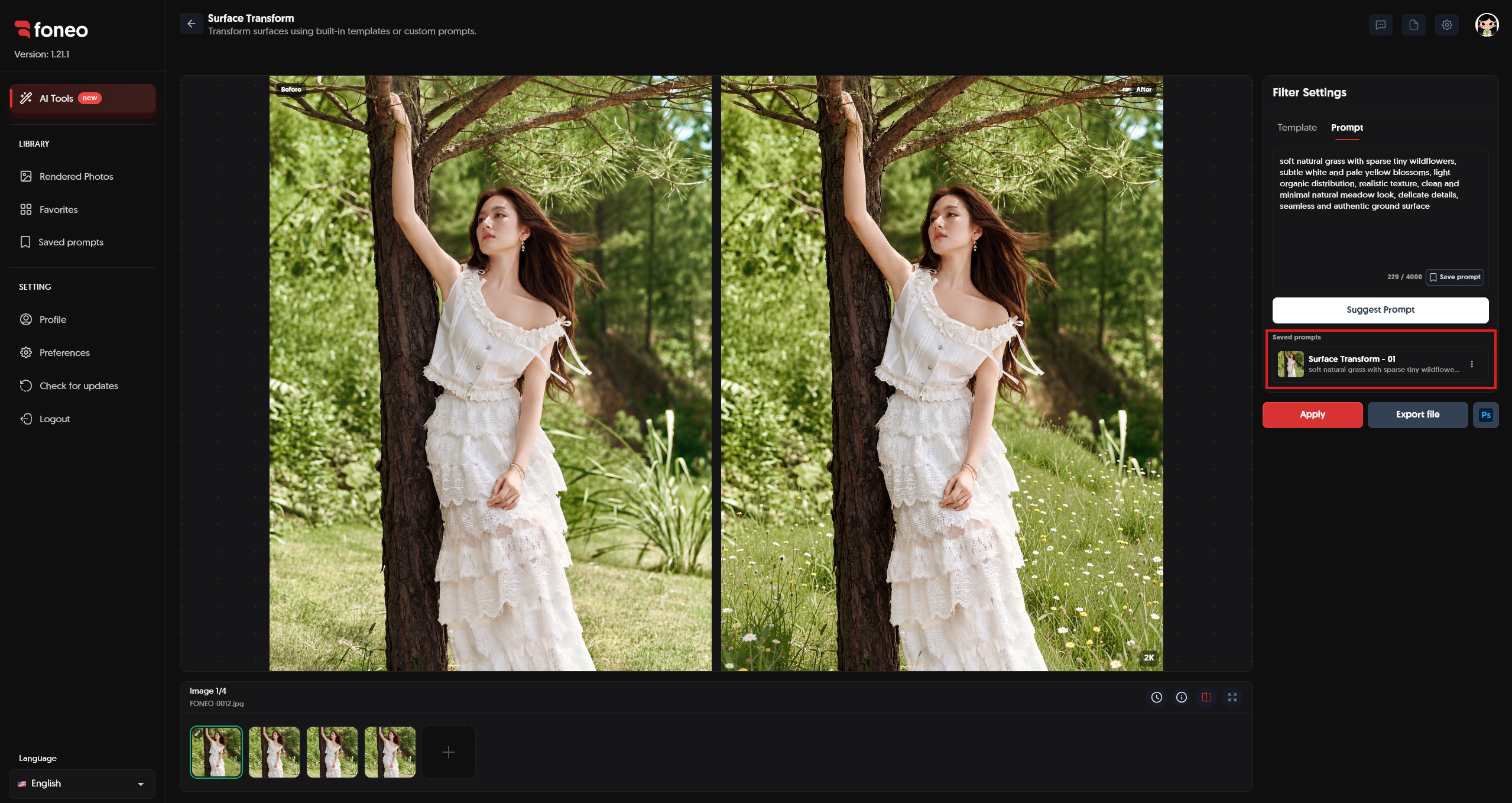
You can reuse saved Prompts for future edits without having to enter the content again.
6. Apply the Effect
After selecting a Template or completing your Prompt, click Apply to let Foneo start processing the photo with AI.
Wait for the processing to finish, then check the result in the preview area.
If the surface does not look suitable, you can:
- Choose a different Template.
- Adjust the Prompt.
- Provide more details about the desired material or texture.
- Click Apply to process the image again.
You can try different options to find the surface that best fits the original photo.
7. Review the Result Before Exporting
After Foneo finishes processing, check the preview area to evaluate the new surface.
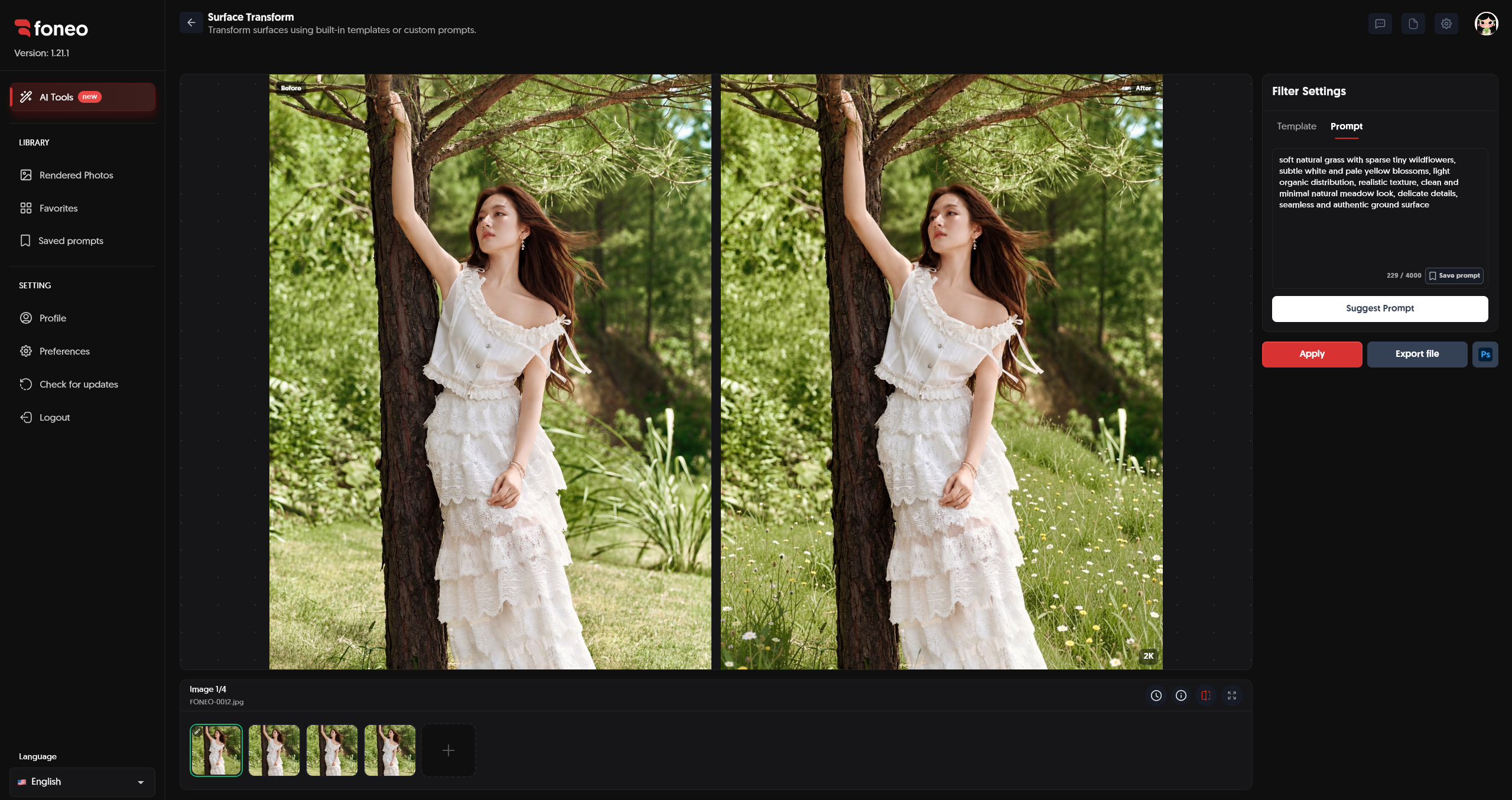
Check whether the new surface blends naturally with the subject, composition, and surrounding environment.
If the result is not suitable, you can return to Template or Prompt to adjust the surface and process the image again.
8. Export the Image
When you are satisfied with the result, click Export file to export the image.
If you want to continue editing in Photoshop, click Ps to open the image and continue editing.
How to Evaluate the Result After Processing
After applying Surface Transform, compare the original photo with the processed result.
Pay attention to:
- Surface: Does the new surface match the desired material or environment?
- Natural appearance: Does the surface texture look natural and realistic?
- Composition: Does the new surface fit the subject's position and composition?
- Lighting: Does the new surface match the lighting conditions in the photo?
- Colors: Do the surface colors blend well with the overall image?
- Details: Is the texture detailed enough without making the image look unnatural?
- Overall: Does the new surface blend seamlessly with the surrounding environment?
If the result is not suitable, try another Template or adjust the Prompt to describe the desired surface more clearly.
Tips for Creating Natural-Looking Surfaces
1. Use a Clear Photo
Use a high-quality photo with a clear composition that is not too dark or noisy.
Photos with more details help Foneo better identify the area that needs to be changed, resulting in a more suitable and natural-looking surface.
2. Choose a Template That Matches the Scene
Choose a Template based on the scene, lighting, colors, and environment of the original photo.
The new surface should complement the surrounding space to create a seamless appearance.
For example, for outdoor photos, choose a surface with colors and textures that fit the natural environment. For images where the subject is standing or lying on a specific surface, choose a material that matches the subject's position and composition.
3. Describe the Prompt Specifically
When using a Prompt, describe important elements such as material, texture, color, level of detail, and surface distribution.
For example, instead of simply writing:
Grass.
You can provide a more specific description:
Soft natural grass with sparse tiny wildflowers, realistic texture, subtle organic distribution and a clean natural meadow appearance.
The clearer your description of the desired surface, the easier it is to control the result.
4. Keep the Prompt Short but Complete
You do not need to write a very long Prompt. Focus on the key changes you want to create.
A simple Prompt structure such as:
Surface type + material + color + texture + level of detail + overall style
can help you create and refine Prompts more easily.
5. Save Frequently Used Prompts
If you frequently use a particular type of surface or style, click Save prompt to save it.
You can give the Prompt an easy-to-recognize name and add a category to make it easier to find in future editing sessions.
6. Try Different Surfaces Before Choosing the Final Result
You do not have to use the first result immediately.
Try several Templates or adjust the Prompt to compare different surface styles. Then choose the result that best fits your intended use.
7. No Reference Image Required
The Surface Transform feature does not require a Reference image.
Simply upload the photo you want to edit to Foneo, then choose a Template or enter a Prompt. Foneo will use the original photo as the basis for creating the surface according to your selection.
Frequently Asked Questions
What is Surface Transform used for on Foneo?
The Surface Transform feature uses AI to replace or transform surfaces in photos, creating new materials and environments that fit the composition of the image.
Do I need a Prompt to use Surface Transform?
No. You can directly choose a ready-made Template.
If you want to create a surface based on your own idea, switch to the Prompt tab and enter your desired description.
Can I create my own custom surface?
Yes. You can use a Prompt to describe the desired surface type, material, color, texture, and style.
What is Suggest Prompt used for?
Suggest Prompt provides Prompt suggestions when you do not have an idea yet or want examples of how to describe a surface.
Can I save a Prompt for reuse?
Yes. After creating a suitable Prompt, click Save prompt to save and reuse it in future editing sessions.
You can name the Prompt, edit its content, and select a category tag for easier organization.
Does Surface Transform require a Reference image?
No. You only need to upload the photo you want to edit to Foneo. You do not need to upload an additional Reference image.
Can I use multiple photos with Surface Transform?
Yes. You can add multiple photos to the thumbnail area using the + button, then select each photo to edit.
Can I change the surface multiple times on the same photo?
Yes. You can try different Templates or adjust the Prompt and click Apply to generate a new result until you achieve a suitable surface.
Can I edit the photo after creating the new surface?
Yes. After processing, you can export the image using Export file or click Ps to continue editing in Photoshop.
Related Articles
Foneo · AI Photo Editing
Ready to try it on your own photos?
Download the Foneo app to edit photos with AI in just a few taps, or see the plan that fits your needs.